ByJohn A
Air Duct Cleaning Boston: Why Bostonians Living in Older Homes Can’t Afford to Skip It
Massachusetts has one of the oldest housing stocks in the United States. The median home in the state was built around 1962, and half of all owner-occupied homes predate that year entirely, making Massachusetts homes roughly 17 years older than the national median. Walk down almost any residential street in Boston, from Dorchester triple-deckers to South End brownstones to Colonial-era homes in the surrounding suburbs, and you’re looking at HVAC systems, ductwork, and additions that have been retrofitted, patched, and rerouted for decades.
That history is part of what gives Boston its character. It’s also exactly why Air Duct Cleaning Boston deserves more attention here than in newer housing markets. Ductwork installed in the 1960s, 70s, or 80s—even when it has been serviced over the years—can accumulate decades of dust, insulation fibers, renovation debris, rodent activity, and general wear that a newer system in a 2015-built subdivision simply hasn’t had time to collect. For homeowners in older Boston properties, an inspection can help identify the condition of the ductwork and determine whether professional cleaning or other maintenance may be appropriate.
What Air Duct Cleaning Actually Involves
Air duct cleaning is the process of removing dust, debris, allergens, and contaminants from the supply and return air ducts of a forced-air heating and cooling system, along with the components connected to it — registers, grilles, diffusers, heat exchangers, coils, and the air handler housing itself.
A proper cleaning typically follows these steps:
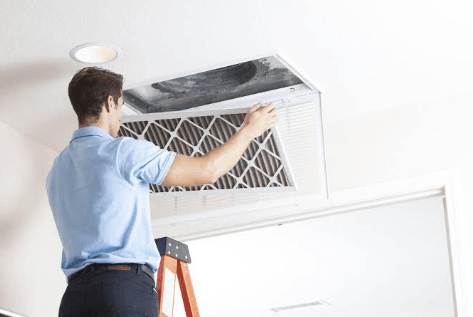
- Inspection. A technician examines the duct system, often with a camera, to assess the level of buildup, identify any damage, mold growth, or pest intrusion, and confirm the layout of the system.
- Containment. Registers and vents are sealed off or covered to prevent dust and debris from spreading into living spaces during the cleaning process.
- Agitation. Specialized brushes, air whips, or compressed-air tools loosen debris that has adhered to duct walls over years of use.
- High-powered vacuum extraction. A truck-mounted or portable negative-pressure vacuum system pulls the loosened debris out of the ductwork and out of the home, rather than just pushing it further down the line.
- Component cleaning. Registers, grilles, the blower motor, and coils are cleaned separately, since these areas often hold as much buildup as the ducts themselves.
- Final inspection and sanitizing (optional). Some jobs include an antimicrobial treatment, particularly in homes with a history of moisture issues or visible mold.
Done correctly, this is a several-hour process for an average single-family home, not a quick 30-minute vent-vacuuming.
Why Boston’s Older Homes Face Unique Duct Challenges
Multiple system generations layered on top of each other. It’s common in Boston-area homes for ductwork to have been extended, rerouted, or partially replaced when a home added central air, finished a basement, or converted from oil heat to gas. Each transition point is a spot where debris, insulation scraps, and even old fiberglass duct liner can break down over time.
Older insulation materials inside the ducts. Duct board and internally lined ductwork were common in mid-century construction. Over decades, that lining can degrade, shedding fibers directly into the airflow — a problem newer sheet-metal duct systems with external insulation don’t share.
Basements and crawlspaces with moisture history. Many Boston-area homes, particularly those close to the harbor or built on older fill, have basements that have seen water intrusion at some point. Ductwork running through these spaces can develop musty odors or, in worse cases, microbial growth that recirculates through the home every time the system runs.
Renovation dust. A city with as much ongoing renovation and gut-rehab activity as Boston means a lot of ductwork has been exposed to construction dust, drywall particulate, and debris during projects — even when the ducts themselves weren’t the focus of the work.
New England’s heating and cooling swing. Boston homes run forced-air systems hard in both directions — cold, damp winters and increasingly humid summers. That means ductwork here works a wider seasonal range than in more temperate climates, cycling more dust and moisture through the system year-round.
Signs Your Ducts Need Attention
Homeowners don’t need to wait for a scheduled cleaning to recognize warning signs. Common indicators include:
- Visible dust blowing out of registers when the system starts up
- A musty or stale odor when the HVAC system runs, especially after it’s been off for a while
- Noticeably more dust accumulating on furniture and surfaces shortly after cleaning
- Family members experiencing more frequent allergy symptoms, congestion, or irritation while at home
- Uneven airflow between rooms, which can indicate blockages or collapsed sections of duct
- A recent renovation, pest issue, or water event in the home
- Visible mold or heavy dust buildup when looking into a register with a flashlight
Any one of these on its own may not mean much, but two or three together are a reasonable signal it’s time for a professional look.
How Often Should Ducts Be Cleaned?
There’s no single universal answer, and homeowners should be skeptical of any company that pushes an aggressive annual schedule without assessing the home first. General guidance suggests every 3 to 5 years for most homes under normal conditions, with more frequent service warranted for households with pets, smokers, recent renovations, water damage history, or occupants with respiratory sensitivities.
Given the age profile of Boston’s housing stock, it’s worth having a professional inspection at least once to establish a baseline, even if a full cleaning isn’t immediately necessary. A trained technician can tell you whether your specific system, given its age, materials, and history, is due for cleaning now or can reasonably wait.
What Good Air Duct Cleaning Does and Doesn’t Do
It’s worth being direct about expectations. Air duct cleaning is not a cure-all for indoor air quality problems, and it won’t resolve issues caused by high outdoor pollen, poor humidity control, or a failing HVAC system on its own. What it reliably does is remove years of accumulated dust and debris from the air pathway itself, reduce the amount of particulate matter that gets recirculated every time the furnace or AC kicks on, eliminate potential odor sources trapped in ductwork, and support more efficient airflow through a system that isn’t fighting years of buildup.
For older Boston homes especially, it also serves as a diagnostic opportunity — a chance for a technician to spot duct damage, disconnected sections, or pest entry points that would otherwise go unnoticed until they caused a bigger problem.
Choosing the Right Team for the Job
Air duct cleaning is one of those services where the difference between a thorough job and a superficial one isn’t always obvious to the homeowner standing in the next room. Look for a provider that inspects before quoting rather than pricing over the phone, uses truck-mounted or high-CFM vacuum equipment rather than a shop vac and a brush, cleans components beyond just the visible ductwork, including the air handler and coils, and is transparent about what was found and what was done, ideally with before-and-after photos.
For homeowners in Boston and the surrounding communities dealing with the realities of an older housing stock, Mass Green Air Duct Cleaning provides full-system air duct cleaning services built around exactly these considerations — inspecting first, cleaning thoroughly, and explaining what’s found along the way. The company also offers standalone air duct cleaning for homeowners who want a professional assessment before committing to a full cleaning.
See also: Why Choose a Local Locksmith in Brooklyn, NY?
A Practical Next Step
If your home was built before the 1980s, hasn’t had its ducts cleaned in the last five years, or has been through a renovation, pest issue, or water event, an inspection is a low-commitment way to find out where things stand. It costs far less than living with reduced air quality — or discovering a bigger ductwork problem the hard way, mid-winter, when your system is working hardest to keep an old New England house warm.